
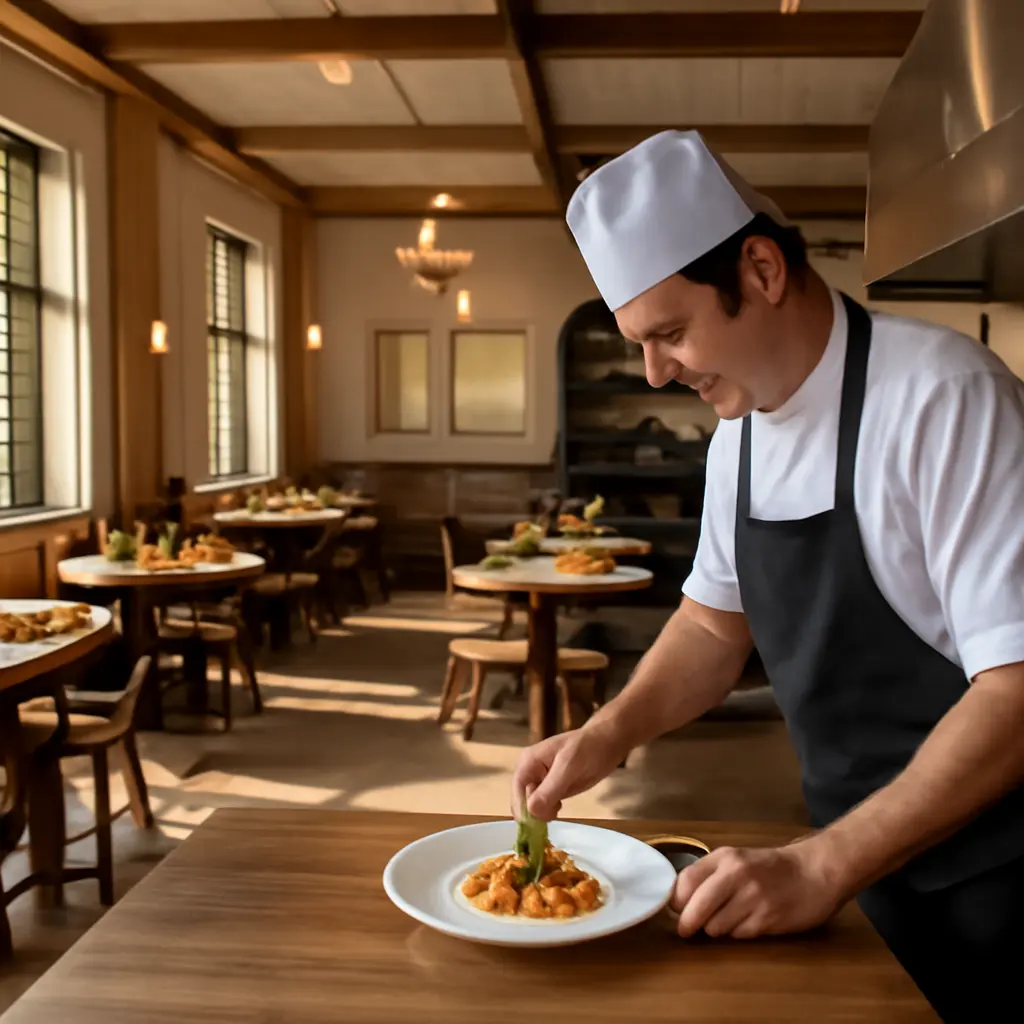
A restaurant concept is the broad idea behind a dining business—its cuisine, setting, service style, and target audience—while a signature dish is a distinctive item strongly associated with that restaurant. Today, signature dishes often matter more than concepts because diners can recognize, photograph, recommend, and return for a particular plate more easily than they can describe an abstract brand idea. The shift is reinforced by a highly competitive restaurant market, social discovery, and consumers’ appetite for memorable experiences: the National Restaurant Association reported that U.S. restaurant and foodservice sales were projected to reach $1.1 trillion in 2024. A strong dish can make a concept tangible, give it a reason to be discussed, and create a repeatable promise—provided the restaurant can deliver it consistently.
Signature Dishes Strengthen Restaurant Differentiation
A signature dish is a restaurant’s most recognizable or identity-defining menu item. It may be an original creation, a distinctive interpretation of a familiar food, or a traditional recipe prepared in a way that guests associate with one establishment. There is no single industry-wide test for what counts as “signature”; in practice, the designation is earned through recognition, repeat orders, word of mouth, and a reliable connection between the dish and the restaurant.
This makes the signature dish a practical form of differentiation. A concept such as “modern neighborhood bistro” may sound appealing, but similar concepts appear across many markets. A particular roast chicken, noodle bowl, dessert, or sauce gives customers something concrete to choose and remember. The concept still matters: it guides the menu, atmosphere, and service. But the signature dish translates that strategy into an experience a diner can taste and describe.
Recognition and word of mouth
Recognition is the degree to which customers connect a dish with a particular restaurant. When that link is strong, guests can recommend the item by name, share it in a review, or bring someone specifically to try it. Research published in the journal Computers in Human Behavior has examined how food photographs and social-media sharing shape dining decisions, illustrating why a visually distinctive plate can travel beyond the restaurant’s own channels. Images do not guarantee repeat business, but a memorable, easily identified dish gives people a simple story to pass along.
A concrete promise in a crowded market
A signature item also reduces the effort required to decide where to eat. Instead of evaluating an entire concept, a prospective customer can ask, “Do I want that restaurant’s famous dumplings?” This shortcut is particularly useful when diners compare many options through maps, review platforms, and social feeds. The National Restaurant Association’s 2024 industry outlook projected $1.1 trillion in U.S. sales, a scale that underscores the intensity of competition and the value of having a clear point of distinction.
Signature Dishes Turn Restaurant Concepts into Experiences
A restaurant concept organizes the business; a signature dish makes that organization sensory and specific. It connects ingredients, technique, origin, presentation, and service in one encounter. The dish can therefore communicate what a restaurant stands for more efficiently than a general label—whether that means regional heritage, ingredient-led cooking, comfort, craft, or playful innovation.
This connection is especially important because diners often evaluate restaurants through more than food quality alone. The experience includes expectations set before arrival, the welcome and pacing of service, the atmosphere, and whether the food matches the restaurant’s claims. A signature dish can anchor those expectations, but it only strengthens the concept when its story and execution fit the rest of the visit.
Heritage and place-based dishes
A heritage-driven signature dish expresses a culinary tradition, a local ingredient, or a community’s food history. It can help a restaurant explain its relationship to place and distinguish authentic knowledge from generic theme. The United Nations Educational, Scientific and Cultural Organization recognizes food-related traditions within its broader work on intangible cultural heritage; its inscription of the Mediterranean diet, for example, describes food practices as connected to shared knowledge, social customs, and cultural identity. Restaurants can draw on such traditions responsibly by crediting their origins and avoiding claims that flatten diverse cuisines into a marketing gimmick.
Craft and technique-led dishes
A technique-led signature dish showcases a process that customers can taste: fermentation, smoking, handmade pasta, careful roasting, or precise pastry work. The dish makes a restaurant’s expertise visible and gives staff a clear way to explain what distinguishes it. Craft alone is not enough, however. The item must be appealing, repeatable, and operationally feasible; an impressive preparation that slows service or varies widely between shifts may damage the promise it is supposed to build.
The bridge between story and service
A dish’s story earns attention, while the service experience confirms whether that story is credible. If a restaurant presents an item as its defining specialty, servers should be able to describe its ingredients and preparation accurately, and the kitchen should be equipped to produce it consistently. Research by Cornell University’s Center for Hospitality Research has explored the relationship between restaurant service, guest satisfaction, and business outcomes; the broader lesson for operators is that a celebrated plate cannot compensate indefinitely for an experience that fails to meet expectations.
Signature Dishes Support Discovery, Loyalty, and Sales
A signature dish can perform several commercial roles at once: attract first-time guests, prompt recommendations, encourage repeat visits, and provide a focal point for menu communication. These outcomes are not automatic. Operators need to measure which items customers actually notice and order, then balance popularity with ingredient cost, preparation time, and contribution to the overall menu.
Digital discovery and shareable food
Digital discovery happens when prospective diners encounter a restaurant through search, reviews, short-form video, or customer photographs. A dish with distinctive color, shape, presentation, or preparation is easier to recognize in these settings than a broad concept statement. The National Restaurant Association has repeatedly identified technology and off-premises dining as important parts of restaurant operations, while consumer use of online platforms continues to shape how businesses are found and evaluated. Restaurants should treat visual appeal as one element of the dish—not as a substitute for flavor, value, or food-safety standards.
Repeat visits and customer loyalty
A reliable favorite gives customers a reason to return and a low-risk choice when they bring new companions. Loyalty grows when the dish remains satisfying across visits and is supported by attentive service. The restaurant should also leave room for discovery: complementary dishes, seasonal specials, and dietary options can keep the menu interesting without weakening the identity of the core item.
Menu engineering and operational fit
Menu engineering is the process of assessing items by measures such as sales volume, food cost, and contribution margin. A dish may be famous but financially fragile if it uses costly ingredients, creates substantial waste, or requires labor-intensive preparation. The U.S. Bureau of Labor Statistics’ Consumer Expenditure Surveys track household spending on food away from home, offering useful context for the role restaurant meals play in consumer budgets; for an individual restaurant, however, point-of-sale data and recipe costing are needed to judge whether a signature item is sustainable.
Operators can review item-level sales, ingredient costs, preparation time, returns, and customer feedback together. If a dish draws guests but has a weak margin, the answer may be portion adjustments, sourcing changes, or a revised price—not necessarily removing the item. If it sells poorly despite heavy promotion, the restaurant should test whether the issue is awareness, menu placement, description, price, or the food itself.
Real-World Examples Show Why the Dish Can Outlast the Concept
Well-known restaurants often become shorthand for particular dishes. The examples below illustrate different routes to that association: a simple item perfected over time, a product linked to a place, and a recognizable preparation that helps make a restaurant group memorable. They are illustrative cases rather than proof that a signature item alone guarantees commercial success.
Katz’s Delicatessen and the pastrami sandwich
New York’s Katz’s Delicatessen is closely associated with its pastrami on rye, an item that connects the restaurant’s identity to deli tradition and a recognizable service ritual. The dish is more than a menu entry: its preparation, presentation, and long-standing association with the venue help visitors understand what makes the experience distinctive. The lesson is that a familiar food can become a signature through quality, continuity, and a strong sense of place—not only through novelty.
Pizzeria Bianco and wood-fired pizza
Phoenix’s Pizzeria Bianco built a widely recognized reputation around wood-fired pizza, connecting a clear product category with ingredient choices and a craft-focused approach. The example shows how a restaurant can own a narrow promise rather than trying to be known for every part of its menu. A focused signature can be especially powerful when guests can readily explain what the restaurant does differently.
A signature dish as a reason to visit
Across restaurants of different sizes, the practical pattern is similar: customers often remember the standout plate before they remember the brand’s positioning language. A signature dish can therefore serve as an entry point to a wider concept. Once guests arrive for the item, the restaurant has an opportunity to introduce its other strengths—hospitality, beverages, regional cooking, or seasonal creativity—and convert a first visit into a fuller relationship.
Building a Signature Dish Without Losing the Restaurant Concept
Restaurants should not treat concepts and signature dishes as competing choices. The concept provides strategic coherence; the dish provides a memorable expression of it. A signature item works best when it reflects the restaurant’s capabilities, fits the audience and price point, and can be made consistently during busy service.
Choose an item that expresses the brand
Start by identifying what the restaurant can credibly own. That may be a regional specialty, a particular cooking method, an ingredient sourced from nearby producers, or a distinctive take on a familiar favorite. Avoid choosing a dish solely because it is currently fashionable; a mismatch between the item and the restaurant’s broader identity can confuse guests.
Test for consistency and feasibility
Before promoting an item as a house specialty, test it across staff, shifts, and realistic service conditions. Document recipes, portion sizes, plating, allergens, and preparation steps. The U.S. Food and Drug Administration’s Food Code provides a model for retail food-safety practices, while local rules govern actual compliance. Consistency and safe handling are part of the product promise, not backstage concerns.
Tell the story clearly and measure the result
Use a concise menu description that explains what makes the dish distinct without overselling it. Train staff to answer common questions, and use photography that represents the actual serving. Then track sales, customer comments, repeat orders, and profitability over time. These measures reveal whether the item is merely attractive in marketing or genuinely valuable to both guests and the business.
Conclusion: The Dish Makes the Concept Memorable
Signature dishes matter more than restaurant concepts today because they turn a broad idea into a specific, shareable, and repeatable reason to dine. They can sharpen differentiation, communicate heritage and craft, support digital discovery, and give customers a familiar route back. The strongest examples do not replace the concept: they embody it. Restaurants should define what they want to be known for, create a dish that expresses that identity, and protect its quality through thoughtful costing, safe preparation, and consistent service. For diners and operators alike, the useful next question is simple: what is the one dish that best explains this restaurant—and does every visit deliver on that promise?
Sources: National Restaurant Association, 2024 State of the Restaurant Industry Report, https://restaurant.org/research-and-media/research/research-reports/state-of-the-restaurant-industry/; United Nations Educational, Scientific and Cultural Organization, Mediterranean Diet, https://ich.unesco.org/en/RL/mediterranean-diet-00884; U.S. Bureau of Labor Statistics, Consumer Expenditure Surveys, https://www.bls.gov/cex/; U.S. Food and Drug Administration, FDA Food Code, https://www.fda.gov/food/fda-food-code; Cornell University, Center for Hospitality Research, https://sha.cornell.edu/faculty-research/centers-institutes/chr/; Katz’s Delicatessen, Our Story, https://katzsdelicatessen.com/; Pizzeria Bianco, About, https://www.pizzeriabianco.com/; Yang, F., “Effects of Restaurant Reviews on Restaurant Image and Customers’ Behavioral Intention,” Computers in Human Behavior, https://doi.org/10.1016/j.chb.2017.03.034.