
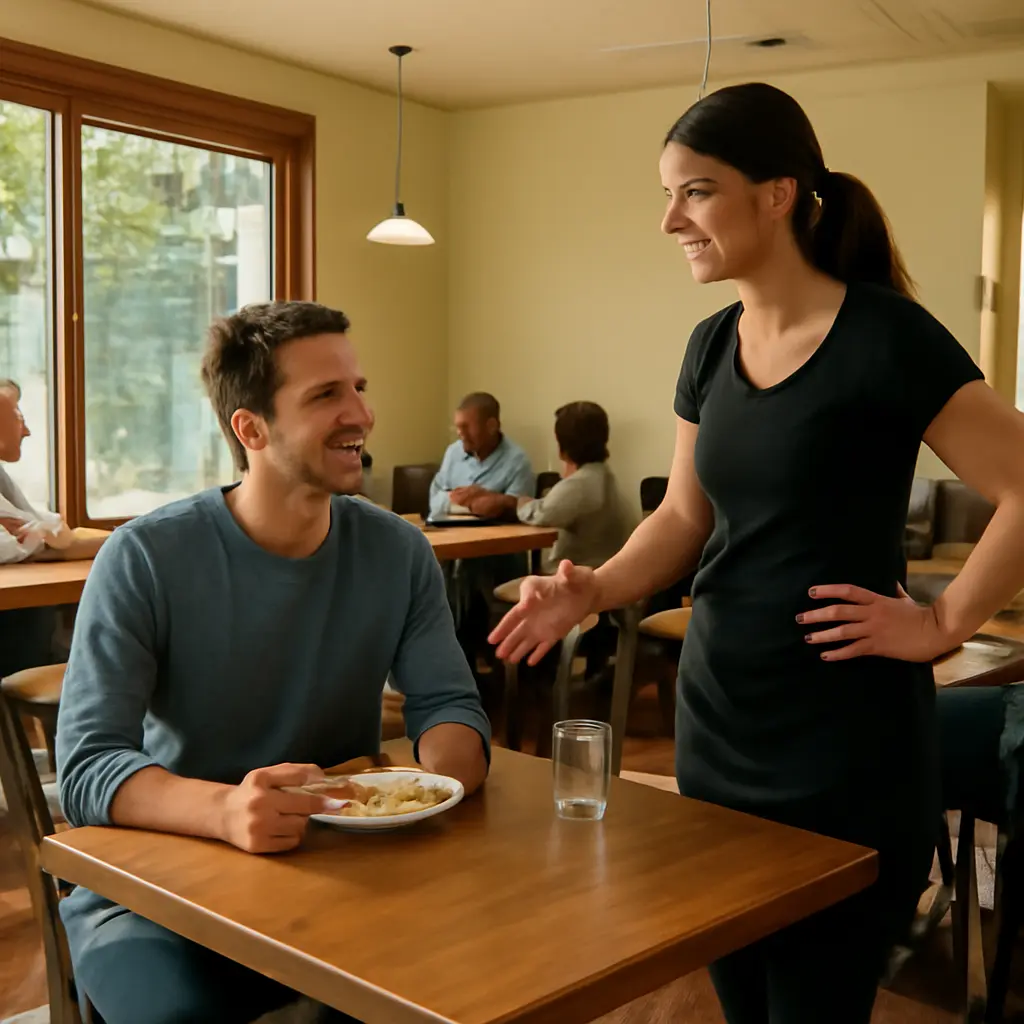
People return to the same restaurants when familiar food, dependable service, fair value, convenience, and a sense of belonging make the experience worth repeating. Restaurant loyalty is not just a matter of taste: it reflects a customer’s overall judgment of what they receive for the money, time, and effort they spend. U.S. Bureau of Labor Statistics consumer-expenditure data show that food away from home is a substantial part of household spending, while the National Restaurant Association’s industry research describes repeat business as an important source of restaurant revenue. Food quality, habit, trust, social connection, and practical convenience help explain why diners return—and what restaurant operators can do to earn that return.
Repeat Visits and Restaurant Loyalty: How Diners Decide to Return
Restaurant loyalty is a customer’s tendency to choose the same restaurant again, often despite other available options. It can be behavioral, shown by repeat visits, or attitudinal, shown by preference and positive word of mouth. A diner may come back because a restaurant reliably delivers a satisfying meal, but lasting loyalty usually reflects several connected factors rather than one exceptional dish.
The topic matters to both customers and businesses. For diners, familiar restaurants reduce uncertainty and make decisions easier. For operators, repeat customers can help stabilize demand and spread awareness through recommendations. The National Restaurant Association’s “State of the Restaurant Industry” research tracks consumer and operator conditions, while the U.S. Bureau of Labor Statistics’ Consumer Expenditure Surveys provide context for household spending on food away from home. These sources help frame restaurant choice as both a personal experience and an economic decision.
Customer Experience and Restaurant Loyalty
Customer experience is the combined impression a diner forms across the restaurant visit: discovering the venue, making a reservation or order, receiving service, eating, paying, and resolving any problem. In its customer-experience research, Qualtrics describes customer experience in terms of customers’ perceptions of their interactions with an organization. Applied to restaurants, this means loyalty grows from the whole visit, not food alone.
The main forms of repeat patronage include routine visits, preference-based loyalty, social or occasion-driven returns, and convenience-led choices. These categories overlap: a nearby café can become part of a daily routine because its coffee is dependable and staff recognize regulars. The bridge between experience and return is consistency: when the expected experience is clear and usually delivered, choosing the restaurant feels less risky.
Food Quality and Consistency
Food quality refers to a diner’s assessment of characteristics such as flavor, freshness, temperature, presentation, and portion. Consistency means those characteristics remain dependable across visits. A customer who enjoys a particular curry, sandwich, or pizza is more likely to return when it tastes and arrives as expected. Conversely, a favorite dish that varies sharply from one visit to the next can weaken confidence even if the restaurant’s best meal was memorable.
The National Restaurant Association regularly identifies food quality and value among the considerations shaping consumers’ restaurant choices. In practical terms, kitchens support repeat visits through clear recipes, ingredient controls, staff training, and realistic menu design. A neighborhood bakery, for example, can build a loyal morning crowd by keeping its coffee and popular pastries reliably available at opening time.
Service, Trust, and Problem Recovery
Service quality is the diner’s judgment of how well employees and systems meet needs, including accuracy, courtesy, responsiveness, and attentiveness. Trust develops when the restaurant does what it promises: orders are correct, wait estimates are credible, and dietary requests are handled carefully. These signals matter particularly to diners with allergies or other restrictions, for whom a mistake can carry consequences beyond inconvenience.
Service recovery—the response to a mistake or complaint—can determine whether a disappointing visit becomes a one-time lapse or a reason to leave permanently. A timely apology, a clear explanation, and a proportionate remedy show that the restaurant takes the customer seriously. The Institute of Customer Service and customer-experience researchers commonly emphasize that complaint handling influences perceptions of fairness and trust; restaurant operators can apply this by making it easy to report problems and empowering staff to resolve routine issues.
Value, Price, and Predictability
Perceived value is the customer’s assessment of what a meal and visit provide relative to their total cost. Cost includes more than the menu price: diners may also consider tips, delivery charges, travel, waiting time, and portion size. A restaurant does not have to be the cheapest to feel worthwhile if the food, service, atmosphere, or convenience justifies the expense.
Predictable pricing and clear menus help customers plan. The Bureau of Labor Statistics’ Consumer Price Index tracks price changes for food away from home, illustrating why restaurant affordability can shift over time even when the experience stays the same. Operators can protect perceived value by explaining portion sizes and fees, offering different price points, and ensuring that promotions do not create confusing conditions.
Habit, Convenience, and Restaurant Choice
Habit is a learned pattern in which a familiar cue—such as the end of a workday or a weekly family outing—prompts a repeated choice. Research on habit, including work by psychologist Wendy Wood and colleagues, describes habitual behavior as strongly guided by context and repetition. Restaurants can become part of those routines when location, opening hours, ordering, and the experience fit customers’ daily lives.
Convenience-led returns are related to loyalty but are not always evidence of emotional attachment. A diner may choose the closest lunch spot because it is quick, accessible, and predictable. This distinction matters: a restaurant that relies only on location may lose visits when a competitor opens nearby, whereas a restaurant that combines convenience with quality and connection gives customers more reasons to stay.
Location, Speed, and Ease of Ordering
Convenience includes proximity, parking or transit access, reasonable wait times, and a straightforward ordering process. Digital ordering can reduce friction, but it must be accurate and easy to use. The National Restaurant Association’s technology research has documented the growing role of digital tools in restaurant operations and consumer interactions. For customers, a useful app or efficient pickup counter can reinforce a restaurant’s place in a routine; confusing interfaces and inaccurate pickup estimates can do the opposite.
For example, a busy lunch café may retain nearby office workers by offering a short, reliable menu and an order-ahead option. Its advantage is not necessarily novelty; it is removing small obstacles while keeping the food dependable. Restaurants can assess this aspect of loyalty by tracking order accuracy, wait times, abandoned digital orders, and repeat purchase patterns.
Familiarity and Reduced Decision Effort
Familiarity lowers the effort and uncertainty involved in choosing where to eat. Returning diners already know what they like, what a meal costs, how long service usually takes, and whether the setting suits their needs. This can be particularly valuable when people are tired, short on time, or choosing for a group with differing preferences.
A restaurant can support this benefit through recognizable menu categories, transparent allergen information, consistent operating hours, and clear communication about changes. Familiarity does not require a static menu: seasonal dishes and new offerings can add interest while preserving dependable favorites. The balance is to give returning customers reasons to explore without making their usual choice unpredictable.
Social Connection and Emotional Attachment
Social and emotional loyalty develops when a restaurant becomes meaningful beyond the meal. It may be associated with family celebrations, a first date, a regular catch-up with friends, or staff who recognize a customer. These returns are occasion-driven or relationship-based: the restaurant is selected because it helps people connect, marks a moment, or feels welcoming.
This form of loyalty connects practical experience to identity and memory. A diner may forgive a minor delay at a neighborhood restaurant that feels like part of the community, while expecting more formal service from a venue chosen for a special event. The strongest businesses understand that different occasions call for different experiences rather than treating every visit as identical.
Atmosphere and Social Belonging
Atmosphere includes lighting, sound, seating, décor, cleanliness, and the social tone of a place. Belonging arises when customers feel comfortable and appropriately welcomed. A lively dining room may suit a group celebration, while quieter seating may matter more to a couple or a customer working alone. The same restaurant can serve these needs through thoughtful zoning, staff awareness, and clear expectations about the setting.
Restaurants also create social value by hosting community events, supporting local groups, or reflecting regional food traditions. A family-run diner that has served generations may be valued not only for its menu but also as a shared local landmark. Such examples illustrate why an experience can generate attachment that a discount alone cannot reproduce.
Recognition, Personalization, and Loyalty Programs
Personalization means adapting service or offers to relevant customer preferences, while recognition is the feeling that a regular customer is remembered. A server who recalls a preferred table or a café that prepares a familiar order can make a visit feel personal. But recognition works best when it is natural and respectful; intrusive use of personal data can undermine trust.
Loyalty programs formalize repeat patronage with points, rewards, or member benefits. They can remind customers to return, but a reward cannot compensate indefinitely for poor food or service. The National Restaurant Association has reported broad restaurant-industry adoption of digital ordering and customer-facing technology, making it easier to manage programs; operators should still measure whether rewards create additional visits rather than simply discounting purchases customers would have made anyway.
How Restaurants Can Measure and Strengthen Repeat Visits
Repeat visits are measurable, but no single metric fully explains loyalty. Restaurants can combine transaction data with customer feedback to learn whether return behavior comes from routine, preference, value, or a particular occasion. Useful measures include visit frequency, time between visits, customer retention, average spend, complaint resolution, and recommendation intent.
- Track repeat-customer rates by location, daypart, and ordering channel, while protecting customer privacy.
- Compare ratings and feedback with operational measures such as order accuracy, service time, and out-of-stock frequency.
- Ask customers why they returned and what would make their next visit easier or better.
- Review loyalty-program redemption alongside incremental visits and margins, not sign-ups alone.
- Use a simple chart to compare repeat-visit rates before and after changes to menu consistency, service training, or ordering systems.
A useful real-world approach is to treat feedback as a diagnostic tool. If a casual restaurant sees strong first-time traffic but weak repeat visits, the issue may be inconsistent execution, value concerns, or a mismatch between marketing and the actual experience. If guests return often but spend less, menu relevance or pricing may need review. Results should be interpreted in context: seasonality, neighborhood changes, inflation, and shifts in working or commuting patterns can all affect visit frequency.
Conclusion: Why People Return to the Same Restaurants
People return when a restaurant repeatedly makes choosing it feel rewarding, dependable, and easy. Customer experience and loyalty are strengthened by food quality, consistent service, trust, and fair perceived value. Habit, location, and streamlined ordering reduce effort, while atmosphere, recognition, and social belonging give a restaurant personal meaning. These factors work together: convenience may prompt the first repeat visit, but quality and connection often determine whether the pattern lasts.
For diners, noticing which qualities matter most can help identify restaurants that fit their needs and budgets. For restaurant operators, the practical next step is to measure repeat behavior, listen to customer feedback, and improve the parts of the experience that create friction. Further reading in consumer-expenditure data, restaurant-industry research, and customer-experience studies can help put local results into broader context.
Sources: National Restaurant Association, 2024 State of the Restaurant Industry Report, https://restaurant.org/research-and-media/research/research-reports/state-of-the-restaurant-industry/; U.S. Bureau of Labor Statistics, Consumer Expenditure Surveys, https://www.bls.gov/cex/; U.S. Bureau of Labor Statistics, Consumer Price Index, https://www.bls.gov/cpi/; Qualtrics, Customer Experience (CX), https://www.qualtrics.com/experience-management/customer/what-is-customer-experience/; Wood, Wendy, and Dennis Rünger, Psychology of Habit, Annual Review of Psychology, https://doi.org/10.1146/annurev-psych-122414-033417; National Restaurant Association, Technology and Restaurant Operations Research, https://restaurant.org/research-and-media/research/