
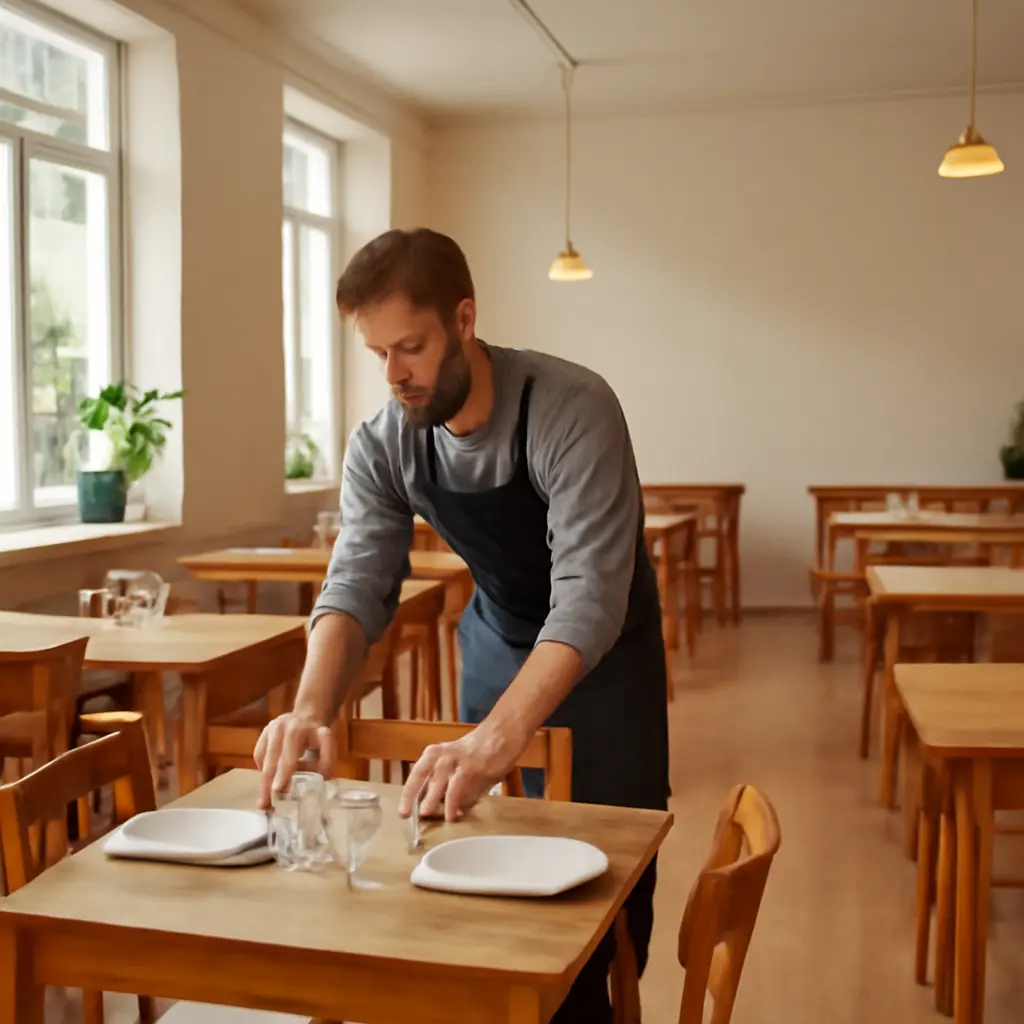
An experience-driven restaurant is a food-service business designed around a distinctive, memorable guest experience as well as the meal itself. Building one means choosing a clear audience and concept, shaping a consistent experience across food, service, space, and technology, then testing the economics before investing heavily. The opportunity is significant: the National Restaurant Association reported that U.S. restaurant and foodservice sales were projected to reach $1.1 trillion in 2024, while competition and operating costs make a well-defined reason to visit essential. This guide explains the concept, its main formats, how to design and validate one, and how to measure whether it works.
Define the experience-driven restaurant concept
An experience-driven restaurant concept is a coordinated promise to guests: a particular kind of food and hospitality delivered through an atmosphere, service style, and set of memorable details. “Experience-driven restaurant” is a practical industry description rather than a standardized regulatory category. The National Restaurant Association’s research on consumer dining behavior emphasizes that guests value the overall experience, including hospitality, convenience, and food quality—not food alone.
The concept works when its elements reinforce one another. A theatrical tasting menu, for example, needs a menu, room, pacing, and staff training that support the performance. A neighborhood bakery-café may instead make everyday comfort, accessibility, and familiarity its defining experience. The aim is not to add spectacle indiscriminately; it is to make the restaurant’s promise recognizable and repeatable.
Core attributes: a clear promise and a coherent journey
A strong concept has a defined audience, a reason to choose it, and a guest journey that delivers on that reason. The journey includes discovery, booking or arrival, ordering, dining, payment, and post-visit communication. Each touchpoint should feel consistent with the promise. A restaurant positioned as relaxed and family-friendly, for instance, should not require a complicated booking process or offer a menu that is difficult to navigate with children.
Common formats and concept hyponyms
Experience-driven restaurants include several related formats. They may be immersive or theatrical venues, chef-led tasting-menu restaurants, interactive dining concepts, themed restaurants, destination restaurants, or casual neighborhood spots built around a distinctive ritual or community identity. These are not mutually exclusive: a chef-led restaurant may also be immersive, while a themed venue may still prioritize approachable food and local regulars.
Choose a format because it supports the audience and business model, not simply because it is fashionable. A highly produced experience may create strong word of mouth but require more labor, specialized equipment, and careful scheduling. A simpler concept can be just as memorable if its food, hospitality, and signature details are distinctive.
Design the guest experience around a specific audience
Once the concept is defined, translate it into decisions guests can see and feel. The U.S. Small Business Administration recommends researching demand, customer characteristics, competitors, and pricing before launching. For a restaurant, this means learning not only what people say they want, but also where they currently dine, what they spend, and what would persuade them to return.
Identify the target guest and the unmet need
A target guest is a useful operating profile, not a vague label such as “everyone who likes good food.” Define likely occasions, needs, and constraints: date nights, family celebrations, after-work meals, tourists seeking a local story, or residents looking for a reliable lunch. Then investigate the alternatives available in the proposed trade area through interviews, observation, competitor visits, and public demographic data.
Test assumptions with potential customers. Ask what they would book, what price feels reasonable, how often they might return, and which parts of the experience matter most. Treat stated enthusiasm as a signal to investigate, not proof of demand; actual reservations, deposits, pop-up attendance, or purchases provide stronger evidence.
Build a sensory and service blueprint
A service blueprint maps what guests experience alongside the staff actions and operational systems that make it happen. Record the intended atmosphere, lighting, sound, scent, menu language, service cadence, uniforms, table layout, and accessibility considerations. Include practical moments—wait times, dietary questions, complaints, and payment—because an otherwise polished experience can be undermined by friction.
Design for consistency rather than relying on a single charismatic employee. The U.S. Food and Drug Administration’s Food Code provides a model for food-safety practices, while local health authorities establish and enforce applicable requirements. A memorable concept must operate within safe food handling, accessibility, fire, and building rules from the start.
Make the menu the anchor, not an afterthought
The menu should express the concept while remaining feasible to produce at the expected volume. Develop a focused selection, identify signature items, calculate recipe costs, and plan for sourcing, prep time, equipment, allergens, and waste. A complex menu can create variety but also increase inventory and training demands; a tighter menu may improve consistency and speed if it still gives guests meaningful choice.
Use menu testing to compare flavor, portion, presentation, price acceptance, and production time. If the concept depends on interactive or tableside preparation, test the full service sequence—not just the dish—so the added theater does not create bottlenecks or compromise food safety.
Validate the business model before committing to a full launch
A compelling experience is not financially sustainable unless its revenue can support labor, rent, ingredients, utilities, marketing, debt, and other operating costs. The National Restaurant Association’s 2024 State of the Restaurant Industry report described ongoing pressure from food, labor, and other expenses. Since cost structures vary by location and format, founders should build estimates from local quotes and test more than one sales scenario.
Estimate startup costs and operating economics
Prepare a startup budget covering lease deposits, design and construction, kitchen equipment, permits, professional services, initial inventory, hiring, training, technology, insurance, and working capital. Then model recurring costs and revenue using assumptions such as seats, opening days, table turns, average check, occupancy, and seasonality. Calculate the break-even sales level and assess whether it remains plausible in a conservative scenario.
The Bureau of Labor Statistics’ Quarterly Census of Employment and Wages and Occupational Employment and Wage Statistics can help founders understand local restaurant employment and wage conditions. These datasets are useful context, but they do not replace an actual staffing plan, payroll estimate, or labor-law review for the specific business.
Run low-cost tests before a permanent opening
A pop-up, ticketed dinner, market stall, or limited-time collaboration can test the concept with less commitment than a permanent lease. Track attendance, sales mix, average spend, timing, customer feedback, repeat interest, and operational problems. The purpose is to learn whether the promised experience is both attractive to guests and deliverable by the team.
For example, a proposed interactive dessert concept could first run as a short series of ticketed events. The operator could compare guest response to different formats, measure how long each table occupies, and determine whether the premium price covers extra labor and ingredients. This is an illustrative test method, not a claim about a particular restaurant’s results.
Choose a site that supports the experience
A site affects visibility, access, rent, delivery logistics, customer flow, and the atmosphere the concept can create. Evaluate the trade area at the times the restaurant intends to serve, including transit, parking, nearby employers or attractions, neighboring businesses, and competing dining options. Confirm zoning, permitted use, ventilation, utilities, occupancy, accessibility, and renovation requirements before signing a lease.
Operate, measure, and improve the restaurant experience
After opening, the concept becomes a repeating operating system. Standard procedures, staff coaching, guest feedback, and business metrics help preserve the experience as demand changes. The goal is not to freeze every detail; it is to protect the distinctive promise while improving the parts that cause friction.
Train staff to deliver the promise consistently
Training should connect tasks to the guest experience. Staff need clear guidance on greeting, menu knowledge, pacing, dietary requests, service recovery, and safety. Rehearse busy periods and unusual situations, and give employees a practical way to raise operational problems. The U.S. Food Code and local health requirements are essential references for safe food operations; service standards should complement, not substitute for, those obligations.
Track guest and financial indicators together
Use a small dashboard that balances guest response with operational performance. Useful measures include reservations and walk-ins, guest counts, average check, repeat visits, no-show rates, food and labor costs, table duration, order accuracy, complaints, and review themes. Interpret metrics together: a longer visit may be a success for a leisurely destination concept but a problem for a fast-turn lunch model.
Collect feedback through conversations, brief surveys, online reviews, and staff observations, while respecting privacy and applicable data rules. Look for recurring patterns rather than reacting to every individual comment. If guests consistently praise a signature ritual but report confusing booking instructions, preserve the ritual and simplify the booking journey.
Use technology where it removes friction
Reservation systems, point-of-sale tools, inventory software, and accessible digital menus can reduce administrative work and provide useful operating data. Choose tools that fit the service style and protect customer information. Technology should make the experience easier to deliver; it should not replace human interaction when personal hospitality is central to the concept.
Conclusion: turn a distinctive idea into a dependable experience
An experience-driven restaurant succeeds when a clear concept and audience shape the menu, service, atmosphere, and guest journey—and when the business model can sustain those choices. Define the promise, research demand, blueprint the experience, test it at small scale, confirm the site and costs, then train the team and monitor results. Restaurant industry sales indicate a large market, but meaningful differentiation must be matched by sound operations and financial discipline. Start by interviewing prospective guests and testing one concrete version of the experience before making an expensive commitment.
Sources: National Restaurant Association, 2024 State of the Restaurant Industry Report, https://restaurant.org/research-and-media/research/research-reports/state-of-the-restaurant-industry/; U.S. Small Business Administration, Market Research and Competitive Analysis, https://www.sba.gov/business-guide/plan-your-business/market-research-competitive-analysis; U.S. Food and Drug Administration, 2022 FDA Food Code, https://www.fda.gov/food/fda-food-code/food-code-2022; U.S. Bureau of Labor Statistics, Quarterly Census of Employment and Wages, https://www.bls.gov/cew/; U.S. Bureau of Labor Statistics, Occupational Employment and Wage Statistics, https://www.bls.gov/oes/