
Milestone venue matching is the process of choosing a place whose practical features and social atmosphere fit the occasion, guests, and expectations. For weddings, anniversaries, graduations, and other landmark events, a good match is more than attractive décor: it accounts for event purpose, guest experience, accessibility, budget, and logistics. This matters because events are emotionally significant and costly; the U.S. Bureau of Labor Statistics’ Consumer Expenditure Survey tracks wedding-related spending within household expenditures, while The Knot’s 2024 Real Weddings Study reported an average U.S. wedding cost of $33,000 for 2023. A structured approach—first defining the occasion, then comparing atmosphere, capacity, access, and service—can reduce the risk of a venue feeling out of place.
Venue matching defines the occasion–atmosphere fit
Venue matching is the evaluation of a location against an event’s purpose and operating requirements. For milestone celebrations, the most useful pairing is occasion–atmosphere fit: whether the venue’s character, layout, service style, and sensory environment support the meaning and tone guests expect. There is no single universal definition used across the event industry; this is a practical planning framework informed by event design principles and venue-selection guidance.
A venue can be beautiful yet mismatched. A formal ballroom may feel excessive for a relaxed family reunion, while a noisy bar may undermine a reflective memorial gathering. Relevant attributes include scale, formality, privacy, acoustics, lighting, décor, food service, and the degree of guest interaction. These attributes should be considered alongside capacity, price, location, accessibility, and weather contingencies—not as substitutes for them.
The event types are hyponyms of milestone occasions: weddings and vow renewals, anniversaries, graduations, retirement celebrations, coming-of-age events, and family reunions. Each has distinct social expectations. A graduation may prioritize flexible mingling and convenient access; an anniversary dinner may need intimate seating and lower noise; a retirement reception may combine speeches with informal conversation. Matching begins by identifying which of these needs are central rather than relying on a venue’s marketing category.
Occasion purpose and emotional tone
Occasion purpose is the event’s reason for gathering, while emotional tone is the feeling hosts want the gathering to create. A milestone may call for solemnity, celebration, nostalgia, elegance, or playful informality. Translate these qualities into observable requirements: for example, “intimate” might mean a room sized for the expected group, a quieter setting, and seating that supports conversation.
This translation helps prevent vague decisions based on photographs alone. Hosts can rank three to five priorities—such as meaningful surroundings, room for dancing, accessible entrances, or a private dining area—and use them to screen options. The U.S. Access Board’s accessibility standards illustrate why physical access is a concrete planning consideration: the ADA Standards specify requirements for accessible routes, entrances, and other features in covered facilities. Hosts should confirm the venue’s actual arrangements for their guests rather than assume that a general claim of accessibility answers every need.
Atmosphere as a combination of sensory and social cues
Atmosphere is the overall impression created by a venue’s physical environment and the way people use it. Lighting, sound, temperature, décor, layout, staff interactions, and service pace all contribute. A historic hall can feel warm and ceremonial with suitable lighting and seating, or cavernous and impersonal if its scale overwhelms the guest count.
The Centers for Disease Control and Prevention notes that noise exposure is measured in decibels and that prolonged or repeated exposure to loud sound can harm hearing. For event planning, the practical implication is not that every celebration must be quiet, but that sound should match the program: guests need to hear speeches, converse comfortably, or enjoy dancing as intended. Ask about sound restrictions, room acoustics, nearby events, and whether the venue can demonstrate the setup under realistic conditions.
Guest experience validates the venue–occasion pairing
Once the occasion’s tone is clear, guest experience provides a practical test of the match. A venue succeeds when the intended atmosphere is available to the people attending—not merely when it looks appealing to the host. Consider who is coming, how they will travel, what assistance they may need, and whether the event program gives them comfortable ways to participate.
Capacity, layout, and interaction
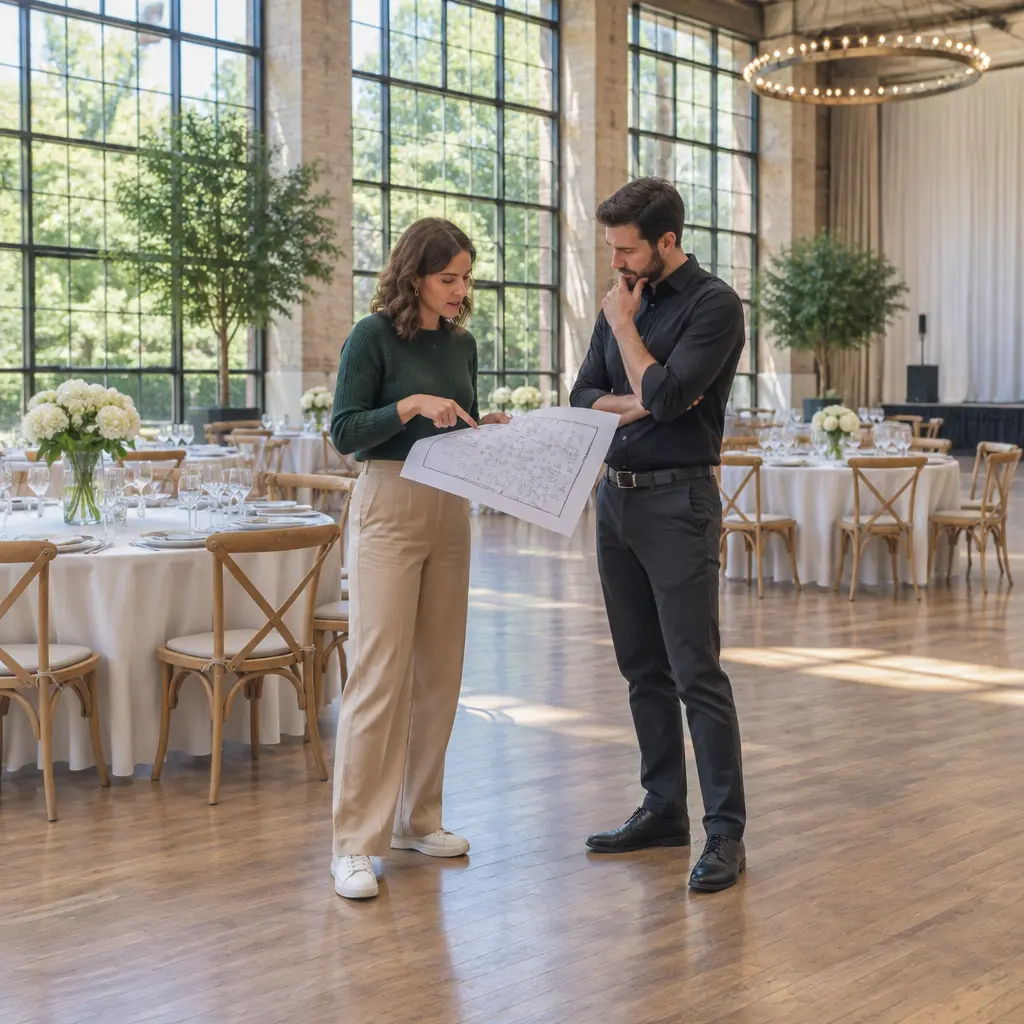
Capacity is the number of guests a space can safely and comfortably accommodate in the planned configuration. A posted maximum may not reflect the usable capacity for a seated meal, dance floor, stage, buffet, or mobility devices. Request a floor plan showing the proposed arrangement, then compare it with the event’s activities and guest count.
Layout shapes social interaction. Round tables support small-group conversation; long tables can create a communal feel; open floor space encourages movement; and separate areas can help guests step away from music or crowds. For a graduation open house, a circulation path from welcome area to food and seating may matter more than a formal central table. For a milestone dinner, sightlines to the speaker and comfortable spacing may be more important.
Accessibility, location, and guest logistics
Accessibility and logistics describe how easily guests can reach, enter, and use the venue. Check step-free routes, accessible restrooms, parking or drop-off arrangements, transit options, signage, seating choices, and distance between event areas. The ADA Standards for Accessible Design provide a regulatory baseline for covered facilities, but individual guest needs may require additional questions about routes, temporary setups, or available accommodations.
Travel convenience can influence attendance and stress. The American Automobile Association’s travel research and the U.S. Department of Transportation’s accessibility resources can help planners think through transportation and mobility considerations, but local conditions should be verified directly. For outdoor or destination events, ask about weather backup spaces, arrival windows, accommodation proximity, and procedures for delays.
Service style, food, and event flow
Service style is the way a venue delivers food, beverages, staffing, and support. A plated meal can reinforce a formal anniversary dinner; stations or a buffet may suit a less structured reunion. The best option depends on the event schedule, guest preferences, dietary requirements, and the venue’s staffing capacity.
Map the event flow from arrival through departure: greeting, photos, meal, speeches, dancing, and closing. Ask who manages setup and transitions, what is included in the fee, and which suppliers are permitted. The U.S. Food and Drug Administration’s food-allergy guidance emphasizes clear communication about allergens; hosts should confirm how the venue records and handles dietary needs rather than relying on assumptions or informal assurances.
A structured comparison reduces atmosphere mismatches
A comparison process turns preferences into evidence. The Knot’s 2024 Real Weddings Study reported that couples spent an average of $33,000 on weddings in 2023, demonstrating why an early venue decision deserves careful review. That figure is a reported U.S. average, not a recommended budget or a measure of every milestone celebration; local prices and event requirements vary considerably.
Create a weighted venue scorecard
A weighted scorecard ranks venues against criteria chosen before tours. Give greater weight to non-negotiables—such as accessibility, a private room, or a weather backup—and lower weight to preferences such as a particular décor style. Score each venue consistently, and record evidence rather than relying on impressions alone.
- Occasion fit: Does the character support the event’s purpose and emotional tone?
- Guest comfort: Are capacity, seating, temperature, acoustics, and circulation appropriate?
- Access and location: Can guests arrive, enter, and move through the space comfortably?
- Operational fit: Can the venue support the schedule, food service, suppliers, and program?
- Cost clarity: Are taxes, service charges, staffing, rentals, overtime, and cancellation terms disclosed?
- Contingency planning: Is there a workable plan for weather, technical issues, or schedule changes?
A simple chart can make trade-offs visible: place atmosphere fit, guest comfort, logistics, and total cost as columns, then compare each shortlisted venue using the same scale. A venue with a slightly lower aesthetic score may be the stronger choice if it substantially improves accessibility, sound, or budget certainty.
Tour under realistic conditions and verify the contract
A site visit validates what photos and listings cannot show. Visit at a similar time of day if possible, observe background noise and natural light, and walk the route guests will use. If the room is empty during the tour, ask to see photographs or diagrams of a comparable event setup. Confirm the exact space, access hours, furniture, staffing, cleanup responsibilities, and any restrictions in writing.
Contracts should state the rental period, included services, payment schedule, cancellation and postponement terms, insurance requirements, supplier rules, and extra charges. The Federal Trade Commission advises consumers to review contract terms carefully and retain copies of agreements. For a high-value event, compare the written offer with the scorecard so that attractive verbal promises do not obscure operational limitations.
Real-world applications show how matching changes by milestone
The same venue can be an excellent choice for one occasion and unsuitable for another because the event’s social purpose changes the criteria. The examples below are planning scenarios, not claims about specific named events.
Wedding or vow renewal
A wedding often combines ceremony, dining, speeches, and dancing, so the venue must support several moods and transitions. A garden may provide a meaningful outdoor setting, but its suitability depends on accessible routes, shade, restroom access, sound limits, and an indoor weather alternative. A hotel ballroom may simplify catering and guest accommodation, yet require thoughtful lighting and room design to avoid a generic feel.
Graduation or retirement celebration
A graduation often brings together guests of different ages who arrive at varying times. A community hall, restaurant, or campus space may work well if it provides convenient entry, flexible seating, and room for greetings and photographs. A retirement event may include formal acknowledgments followed by casual conversation; a venue with a quiet area and clear sightlines can support both without forcing the gathering into a single tone.
Anniversary or family reunion
An anniversary may prioritize privacy, a favorite shared setting, or an intimate meal, while a reunion may prioritize affordability, flexible use, and space for children and older relatives. A restaurant private room can make an anniversary feel personal, whereas a park pavilion may better suit a daytime reunion if weather, access, permits, and restroom facilities are addressed. In both cases, guest needs—not venue prestige—should guide the decision.
Conclusion: occasion–atmosphere fit makes milestone events more welcoming
Effective milestone venue matching starts with the occasion’s purpose and emotional tone, then tests the venue against atmosphere, capacity, layout, accessibility, service, budget, and logistics. Guest experience validates the pairing, while a weighted scorecard, realistic site visit, and careful contract review help expose mismatches before they become costly. Use these criteria to shortlist venues, ask specific questions, and prioritize the features that matter most to the people attending. A venue should not merely look impressive; it should help the event feel right.
Sources: The Knot, 2024 Real Weddings Study, https://www.theknot.com/content/real-weddings-study; U.S. Bureau of Labor Statistics, Consumer Expenditure Surveys, https://www.bls.gov/cex/; U.S. Access Board, 2010 ADA Standards for Accessible Design, https://www.access-board.gov/ada/; Centers for Disease Control and Prevention, Noise and Hearing Loss Prevention, https://www.cdc.gov/niosh/noise/prevent/; U.S. Food and Drug Administration, Food Allergies, https://www.fda.gov/food/food-labeling-nutrition/food-allergies; Federal Trade Commission, Shopping for Services, https://consumer.ftc.gov/articles/shopping-services.