
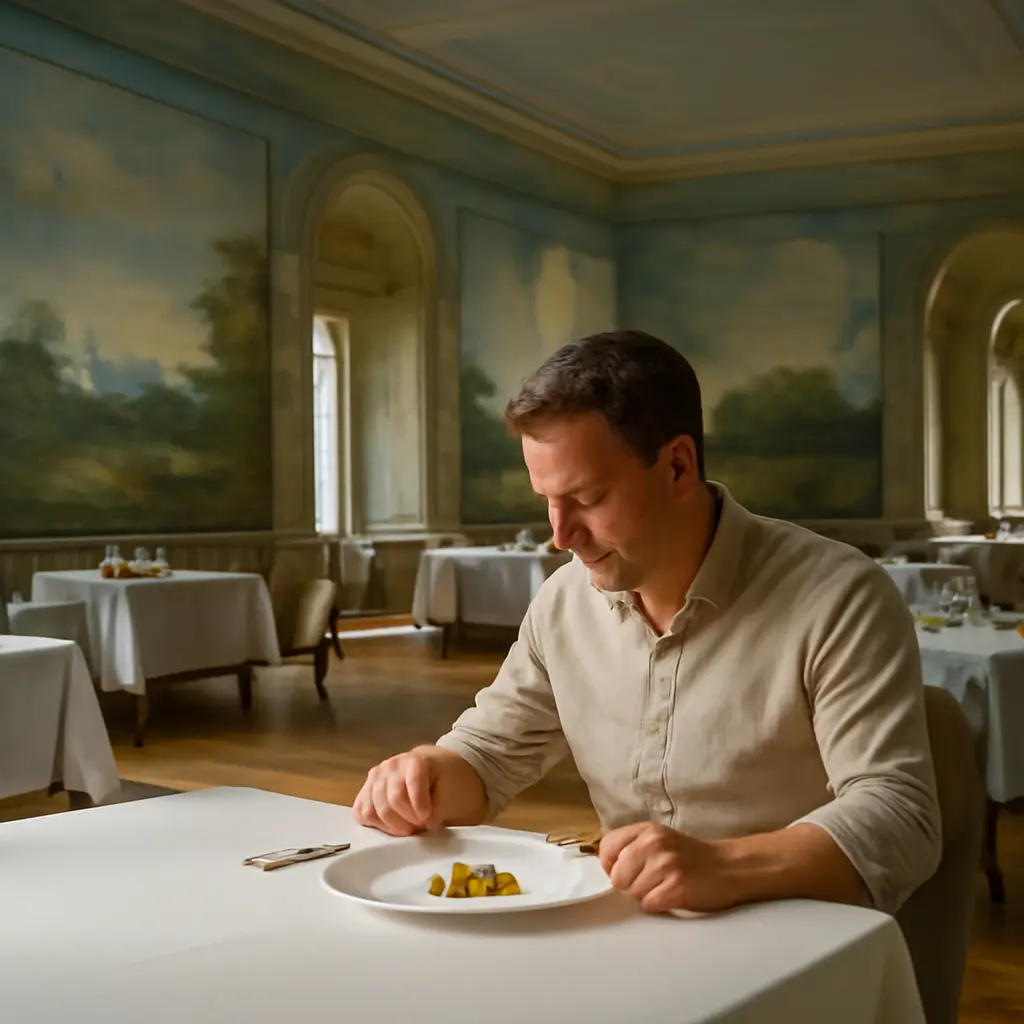
Immersive dining transforms a meal into a staged, multisensory experience by combining food with storytelling, theatrical performance, technology, or distinctive environments. Its rise reflects diners’ interest in experiences worth sharing as well as eating: the National Restaurant Association reported that 64% of adults surveyed in its 2024 food-and-menu trends research were interested in restaurants offering immersive experiences. From projection-mapped tasting menus to themed venues and chef-led performances, the format is reshaping hospitality while raising practical questions about price, accessibility, operational complexity, and whether spectacle can support excellent food.
Immersive dining experiences combine sensory design and hospitality
“Immersive dining” is a broad industry term rather than a single standardized category. In practice, it describes a meal deliberately designed to engage guests beyond taste—through visual surroundings, sound, narrative, interaction, or performance—while retaining food and service as central parts of the experience. This distinguishes it from ordinary décor or entertainment that happens to share a venue with a restaurant: in an immersive format, the environment and meal are coordinated to shape the guest’s attention and participation.
The idea draws on established research into multisensory perception. Charles Spence, an experimental psychologist at the University of Oxford who studies food and the senses, has documented how sound, sight, and other contextual cues can influence people’s food experiences and expectations. That research does not mean technology automatically makes a meal better; it helps explain why lighting, music, presentation, and setting can affect how a dish is perceived. As immersive dining expands, operators apply these principles through several distinct formats.
Sensory-led dining
Sensory-led dining uses coordinated elements such as lighting, sound, aroma, tableware, and plating to influence how guests experience a menu. A quiet room and carefully chosen soundtrack may encourage attention to delicate flavors, while dramatic lighting can make a course feel theatrical. The design is most effective when it complements the food rather than competing with it. Sensory cues can also create unintended effects: loud music may make conversation difficult, and intense scents can interfere with aroma perception or affect guests with sensitivities.
Narrative and theatrical dining
Narrative dining gives a meal a storyline, with courses, staff interactions, or scenic changes contributing to a sequence. Guests might follow a fictional journey, encounter characters, or receive dishes that represent stages in a story. The format includes dinner theater, interactive performances, and destination-style tasting events. Its defining feature is not simply live entertainment, but a planned relationship between the narrative and the meal. Operators need to time service carefully so that a performance does not leave food waiting or make guests feel pressured to keep pace.
Technology-enhanced dining
Technology-enhanced dining uses tools such as projection mapping, digital scenography, interactive displays, augmented reality, or synchronized audio. A projection can change the apparent setting around a table, while digital content can explain ingredients or connect a dish to a place. These elements may make a concept memorable, but they introduce equipment, maintenance, content-production, and staffing costs. Technology is therefore a means of delivering the experience, not a substitute for sound cooking, reliable service, or a clear concept.
Immersive dining experiences respond to experience-driven demand
Restaurants have always used atmosphere to distinguish themselves, but immersive formats make that atmosphere part of the product. The National Restaurant Association’s 2024 research found that 64% of adults surveyed expressed interest in restaurants offering immersive experiences, an indication of potential demand rather than a guarantee of sales. Experience-led venues also fit a wider consumer pattern in which diners seek occasions that feel distinctive, social, and worth remembering. Social-media sharing can amplify visibility, although a photogenic room alone does not ensure repeat visits.
The format spans a spectrum from modest to elaborate. A chef’s counter with direct interaction may be immersive without expensive technology; a ticketed, multi-course production may involve theatrical sets and a fixed schedule. This range matters because the strongest concept depends on audience, location, price, and operational capacity—not on maximizing spectacle.
Themed and destination restaurants
Themed restaurants build a recognizable world through architecture, décor, uniforms, menu language, and service rituals. Destination restaurants extend that idea by making the venue itself a reason to travel or plan a special outing. Their appeal often rests on consistency: when the food, room, and staff all support the same concept, guests can understand what makes the visit distinct. A theme that feels superficial or poorly maintained, by contrast, can weaken trust and make the experience seem like a novelty rather than a complete hospitality offering.
Chef-led and participatory experiences
Chef-led formats place guests close to preparation and decision-making through tasting counters, open kitchens, ingredient demonstrations, or conversations with culinary staff. Participatory experiences invite guests to make choices, handle ingredients, or influence parts of the meal. These formats can deepen understanding of technique and provenance, but participation should remain optional and accessible. Clear explanations of allergens, dietary substitutions, and the degree of guest involvement help prevent an interactive feature from becoming a barrier.
Immersive dining experiences require operational and financial discipline
An immersive concept is also an operating model. It may depend on timed seatings, synchronized courses, trained performers, audiovisual equipment, specialized interiors, or ticketing systems. These requirements affect labor, capacity, maintenance, and the pace of service. The U.S. Bureau of Labor Statistics reported that food preparation and serving occupations employed roughly 12.8 million people in May 2023, underscoring the scale of the workforce context in which restaurants compete for trained staff. The figure covers the broad occupational group, not immersive venues specifically, but it highlights why staffing plans matter.
Operators should evaluate the full guest journey—from booking and arrival through dining and departure—rather than focusing only on the centerpiece attraction. A compelling concept can still fail if guests encounter confusing ticket rules, long waits, inaccessible seating, poor acoustics, or inconsistent food quality.
Revenue, pricing, and repeat visits
Ticketed seatings and set menus can make demand and ingredient purchasing more predictable, while premium experiences may support higher per-guest spending. However, high production costs and limited seating can make profitability sensitive to occupancy. Businesses should track reservation conversion, cancellation rates, average spend, labor hours per seating, guest satisfaction, and repeat bookings. These measures help distinguish a genuinely sustainable experience from one that attracts initial attention but struggles to retain customers.
Accessibility, inclusion, and guest comfort
Inclusive design considers mobility access, sensory needs, language, dietary requirements, and different comfort levels with participation. Darkness, flashing visuals, loud sound, confined seating, or mandatory audience interaction may exclude some guests. Venues can offer quieter or lower-stimulation seatings, describe sensory effects before booking, provide accessible routes and seating, and communicate ingredients and allergens clearly. Such choices are not merely accommodations; they broaden the audience able to enjoy the experience.
Immersive dining experiences are evolving through measured innovation
The next phase is likely to combine physical hospitality with selective digital tools, more personalized menus, and stronger attention to sustainability and accessibility. The best innovations solve a guest or business need: digital storytelling may make a region’s ingredients easier to understand, while flexible production design may allow a venue to refresh its experience without rebuilding an entire room. Operators should test new features with real guests and assess whether they improve comprehension, enjoyment, or efficiency.
A useful way to compare formats is to map them across two dimensions: how much they engage the senses and how much they invite guest participation. A tasting menu with subtle sound design may be highly sensory but low-participation; an interactive cooking session may be high-participation with relatively simple staging. This conceptual chart can help teams choose a format that matches their audience, budget, and culinary strengths rather than pursuing technology for its own sake.
Real-world concepts illustrate the range. Ultraviolet by Paul Pairet in Shanghai is known for pairing a multi-course meal with changing audiovisual environments, while projection-led and theatrical dinner productions in major cities use digital scenery and performance to create a shared storyline. Such examples demonstrate the format’s potential, but they should not be treated as proof that every market can support the same investment. Local demand, venue economics, and execution determine whether a model is viable.
Conclusion: Immersive dining experiences unite food, story, and setting
Immersive dining is a varied approach to hospitality in which sensory design, narrative, technology, or participation becomes part of the meal. Consumer interest provides a reason for restaurants to explore the category, while multisensory research helps explain why coordinated cues can shape a guest’s experience. The most durable concepts balance this appeal with food quality, operational discipline, fair access, and financial measurement. Restaurant operators considering the format should begin with a clear guest promise, test it at a manageable scale, and use feedback and performance data to refine it. Diners and industry readers can learn more by exploring sensory research, restaurant trend reports, and case studies of established experiential venues.
Sources: National Restaurant Association, 2024 State of the Restaurant Industry Report, https://restaurant.org/research-and-media/research/research-reports/state-of-the-restaurant-industry/; Oxford University, Charles Spence profile and research on multisensory food perception, https://www.psy.ox.ac.uk/people/charles-spence; U.S. Bureau of Labor Statistics, Occupational Employment and Wage Statistics, May 2023, Food Preparation and Serving Related Occupations, https://www.bls.gov/oes/2023/may/oes350000.htm; Ultraviolet by Paul Pairet, official restaurant information, https://uvbypp.cc/.